Why the Best Movies, Albums, and Shows You've Never Heard Of Are Probably Better Than Anything Trending Right Now
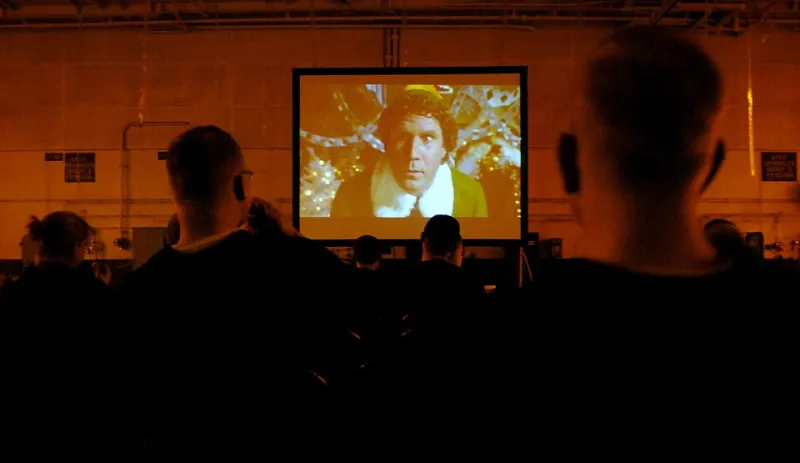
Photo: U.S. Navy photo by Mass Communication Specialist 2nd Class Arturo Chavez, Public domain, via Wikimedia Commons
There's a weird thing that happens when you finish watching something truly extraordinary. You close your laptop, sit with it for a minute, and then immediately want to tell someone — anyone — about it. So you go to social media. You search the title. And you find... almost nothing. A few Reddit threads from three years ago. A Letterboxd review from a film student in Portland. Maybe a tweet with eleven likes.
Meanwhile, a reality dating show you've never watched has seventeen trending hashtags before 9 AM on a Tuesday.
This is the hidden gem paradox, and if you've ever felt it, you're not imagining things. The entertainment that earns the most cultural oxygen isn't always — or even usually — the entertainment that deserves it most.
The Algorithm Isn't Evil. It's Just Indifferent.
Let's be clear: nobody at TikTok or Instagram sat down and decided to suppress great art. The platforms aren't conspiring against slow-burn indie dramas or jazz-influenced concept albums. They're just doing what they were built to do — maximize engagement, keep eyeballs on screen, and serve content that already has momentum.
The problem is that momentum is self-reinforcing. When something gets shared, the algorithm shows it to more people. When more people see it, more people share it. Within 48 hours, a piece of content can go from zero to inescapable — not because it's the best thing out there, but because it hit at exactly the right moment, with exactly the right emotional trigger, for exactly the right initial audience.
Quality doesn't follow that curve. A devastating documentary about a forgotten American subculture, a debut novel adapted into a quiet six-episode series, a jazz-folk album recorded in a converted barn in Vermont — these things require time, context, and a certain kind of attention that viral content actively discourages.
The algorithm rewards the immediate. Great entertainment often rewards the patient.
Marketing Budgets Are Basically a Spoiler for What You'll See Trending
Here's something the entertainment industry doesn't love to talk about: the correlation between a film's marketing budget and its social media presence is way stronger than the correlation between a film's quality and its social media presence.
A major studio release dropping this weekend may have a $40 million marketing campaign behind it — influencer partnerships, coordinated press junkets, sponsored content across every platform you use. The result is a kind of manufactured cultural gravity. You feel like everyone is talking about it because, in a very engineered sense, they are.
Compare that to a critically acclaimed A24 title from two years ago that you still haven't seen, or an indie horror film that won Sundance but got a limited theatrical release in twelve cities. These projects often have marketing budgets measured in the hundreds of thousands, not tens of millions. Their discovery is left almost entirely to word of mouth — the old-fashioned, slow-burning kind.
This doesn't mean big-budget films are bad. Some of the most genuinely great entertainment gets major studio backing. But the marketing spend tells you what a studio wants you to watch, not necessarily what's worth your time.
Cultural Timing: Why Some Masterpieces Just Miss the Window
Even beyond algorithms and budgets, there's a stranger force at work — timing. Cultural moments have a kind of texture to them, and certain types of entertainment only fit certain textures.
A meditative, three-hour drama about grief and silence might be an absolute masterwork, but if it drops the same week as a major awards show and two massive franchise releases, it simply doesn't have room to breathe in the conversation. The cultural bandwidth is full. People move on. The film becomes a recommendation whispered between cinephiles rather than a shared national moment.
This is why so many "hidden gems" feel like they belong to a slightly different era. You watch something and think, this would have been massive if it came out two years earlier — and you're probably right. Timing isn't everything, but in entertainment discovery, it's closer to everything than we'd like to admit.
How to Actually Find the Good Stuff
So if the algorithm isn't going to do it for you, how do you seek out entertainment that genuinely deserves your attention? A few approaches that actually work:
Follow critics, not just audiences. Aggregate scores on sites like Rotten Tomatoes can be useful, but the critic score and the audience score often diverge sharply for exactly the kinds of films and shows worth seeking out. Find two or three individual critics whose tastes align with yours and follow their recommendations directly. A trusted human voice beats a crowd-sourced number every time.
Use niche communities as your discovery engine. Subreddits dedicated to specific genres, Letterboxd lists, music forums like Rate Your Music — these spaces are full of people who've already done the excavation work. The signal-to-noise ratio is dramatically better than the For You page.
Reverse-engineer what you already love. If a film or album genuinely moved you, dig into who made it. Who directed it? Who produced it? Who was in the supporting cast? Who mixed the record? These threads often lead you directly to other work that will hit the same way — work you might never have found otherwise.
Give things more than fifteen minutes. The viral content economy has trained us to make judgments in seconds. Some of the best entertainment is deliberately slow to open up. A series that takes three episodes to find its rhythm, an album that doesn't click until the fourth listen — these aren't failures of the work. They're invitations to develop your own taste rather than borrowing someone else's.
The Seek On Approach: Discovery as a Practice
There's something genuinely satisfying about finding a piece of entertainment that feels like it was made for you — not for an algorithm, not for a marketing demographic, but for the specific person you happen to be at this moment in your life.
That kind of discovery doesn't happen by scrolling. It happens by seeking. By following curiosity down rabbit holes, by trusting recommendations from people who actually think about this stuff, by being willing to sit with something that doesn't immediately announce its greatness.
The hidden gem paradox is real. The best stuff often doesn't trend. But that's not a reason to give up — it's a reason to get better at looking.
And honestly? Finding something incredible that nobody else in your friend group has seen yet is one of the better feelings entertainment has to offer. Own it.